If you have ever woken up feeling significantly older than you actually are—stiff neck, tight shoulders, maybe even a headache throbbing behind your eyes—you have likely blamed it on “sleeping funny.” But the reality is often less about a random bad position and more about the equipment you are using.
Most of us sleep on standard rectangular pillows filled with down, feathers, or polyester fiber. While these feel soft and inviting when you first fluff them up, they are notorious for collapsing under the weight of your head during the night. This lack of sustained support causes your neck to bend at awkward angles, straining the muscles and ligaments while you sleep.
This is where cervical memory foam pillows come in. Unlike traditional pillows, these are tools designed to support neutral sleep posture by filling the gap between your head, neck, and the mattress.
The Anatomy of Alignment
The goal of a cervical pillow is neutral spinal alignment. When you lie on your back, your cervical spine (the neck) has a natural C-curve. When you lie on your side, your spine should form a straight horizontal line from your head to your tailbone.
Standard pillows often force your head too high (chin to chest) or let it sink too low. Cervical pillows typically feature a contoured design to address this. By aiming to support the natural curve of the neck rather than just elevating the head, these pillows allow the muscles in your upper back and shoulders to relax more effectively.
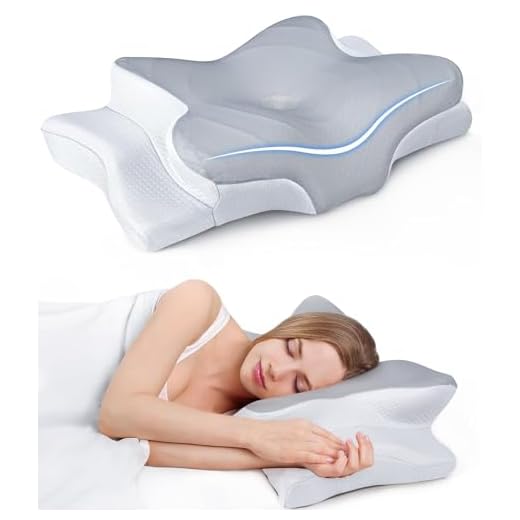
Why Memory Foam Beats Polyester
The shape is half the equation; the material is the other. Memory foam is the standard for cervical pillows because of its unique viscosity—it responds to heat and pressure, molding to your specific anatomy.
This is the critical difference between foam and polyester fiber. Polyester is “springy” and pushes back against your head, creating pressure points. Or worse, it shifts away during the night, leaving you flat. Memory foam yields to your weight but doesn’t collapse. High-density foams, like those found in premium options, are firm enough to hold the weight of your head all night, helping maintain the alignment you started with.
Navigating the Options: Shapes & Features
Not all cervical pillows look or feel the same. Understanding the differences is key to finding one that you can actually sleep on comfortably.
The “Wave” vs. The “Butterfly”
There are generally two main shapes you will encounter:
- The Contour Wave: These look like traditional rectangular pillows but with a dip in the middle. One side is higher than the other, allowing you to choose the neck height that fits you. These are great for people transitioning from standard pillows because they look and feel less “alien.”
- The Butterfly: These have a distinct shape with cutouts on the sides and a hollow center. The cutouts are designed as armrests for side sleepers, while the center cradles the head to prevent it from rolling. They offer superior stability but look very different from normal bedding.
Getting the Height Right: Adjustability Matters
Height is critical. If a pillow is too high, it strains your neck upward; too low, and it strains it downward. Many modern options now come with adjustable inserts. These allow you to add or remove layers of foam to customize the loft. If you are unsure of your exact measurements, an adjustable model is often the safest bet.
Dealing with Heat
Memory foam is excellent for support, but it is notorious for retaining body heat. If you naturally “sleep hot,” look for pillows that specifically feature cooling gel layers or covers made from “Ice Silk” or Bamboo. These materials help dissipate heat and keep the surface temperature neutral.
The “Ugly” Truth: What to Expect
While the potential benefits of switching to an ergonomic pillow are significant, it is important to be realistic about the transition. These are not your typical fluffy hotel pillows, and they come with a few quirks that can catch new users off guard.
- The Firmness Shock: To support the weight of your head, cervical pillows are denser than down. For the first week, it might feel like sleeping on a firm block. Your body often needs a “break-in period” of 1–2 weeks to adjust to the new alignment.
- The Size Quirk: Many cervical pillows labeled “Queen” are physically smaller than a standard bed pillow. They may look a bit lost in a King-sized pillowcase or on a large bed.
- The “New Foam” Smell: Memory foam often has a manufacturing scent known as off-gassing. Most pillows require 24 to 72 hours of airing out in a ventilated room before the smell dissipates.
Is It Worth the Switch?
If you deal with morning stiffness, snoring, or tension headaches, the adjustment period is usually a small price to pay for the potential relief. Supporting your sleep posture is one of the most passive yet effective ways to improve your daily comfort.
We have analyzed the market to find the best options, comparing the supportive “Wave” styles against the stable “Butterfly” shapes to help you find the right fit.
Read the full guide: Best Cervical Neck Pillows for Pain Relief