We all know that feeling: you finish a long run, a heavy leg day at the gym, or even just a twelve-hour shift on your feet, and your legs feel like lead weights. You prop them up on a pillow, maybe try to foam roll a little, but that deep, throbbing heaviness just lingers.
For a long time, the solution to this—pneumatic compression therapy—was hidden away in professional sports locker rooms or expensive physical therapy clinics. If you weren’t an elite athlete, you were out of luck. But recently, this technology has moved into the home, promising to deliver that “fresh legs” feeling while you sit on your couch and watch TV.
But are they just expensive sleeping bags for your legs, or do they actually make a difference? Here is what you need to know before you dive in.
Disclaimer: This guide is for informational purposes only and is not medical advice. If you have a specific medical condition, always check with a clinician before using compression therapy.

How Do They Actually Work?
At a basic level, compression boots are large, inflatable sleeves that encase your legs. Once turned on, they don’t just squeeze you tightly; they use dynamic, sequential air compression.
Think of it like a tube of toothpaste. The boots inflate in zones, usually starting at your feet and moving upward toward your heart. This wave-like motion is designed to mimic the body’s natural muscle pump. By applying external pressure, the boots aim to support your circulatory system, which may help reduce that stiff, swollen sensation.
- Circulation Support: The mechanical squeezing action promotes blood flow, which is essential for bringing fresh oxygen to tired muscles.
- Fluid Movement: They are designed to help move fluid and byproducts associated with fatigue out of the limbs.
- Lymphatic Support: This process is sometimes described as supporting lymphatic flow, which can help alleviate temporary swelling.
- Passive Recovery: Unlike foam rolling, which requires effort and can be painful, this allows you to relax completely while the machine does the work.
Compression Boots vs. Massage Guns: What’s the Difference?
Since you are looking into recovery tech, you probably already own—or are considering—a massage gun. It is common to wonder if you need both.
The simplest way to view it is Macro vs. Micro:
- Massage Guns (Micro): These are percussive tools designed to attack specific trigger points. If you have a knot in your quad or a tight spot in your calf, a massage gun is the tool to target that specific area.
- Compression Boots (Macro): These deal with the “whole system.” They don’t target knots; they flush the entire limb. They are designed for general heaviness, fluid retention, and global fatigue rather than pinpoint pain.
In short: Use the gun for the knot, use the boots for the flush.
Are You the Target Audience?
You might think these are strictly for marathon runners or triathletes, but the user base is actually much wider.
- The Endurance Athlete: If you are racking up miles running or cycling, these are designed to support quicker turnaround times between sessions.
- The “On-Your-Feet” Professional: Nurses, retail workers, and servers often deal with gravity-induced swelling. Compression therapy can provide significant relief after a long shift.
- The Desk Worker: Ironically, sitting all day can also lead to poor circulation and fluid retention. A session in the evening may help wake up dormant legs.
When to Skip a Session (Safety First)
While pneumatic compression is generally safe for healthy individuals, it is not for everyone. Because these devices mechanically push fluid through your veins, there are specific medical conditions where you should not use them without a doctor’s approval.
- Deep Vein Thrombosis (DVT): If you have a history of blood clots, using compression could be dangerous.
- Peripheral Arterial Disease (PAD): If you suffer from poor arterial circulation, compressing the limbs may not be safe.
- Acute Injuries: Do not use these over fresh fractures or broken bones.
- Open Wounds: Avoid covering unhealed cuts or sores.
- Severe Heart Issues: Since these boots move fluid back toward the core, those with congestive heart failure should consult a physician first.
What to Expect: Cost and Daily Use
Understanding the landscape of these devices is important because the price gap is massive. You can find budget options for around $150, while top-tier models push past $1,000.
The Setup: Most systems consist of two boots and a control unit (either a handheld remote or a box that sits next to you). You zip your legs in, select a pressure level, and let them run for 20 to 30 minutes. The sensation should be firm—like a very tight blood pressure cuff—but never painful.
The Investment:
- Budget ($150 – $300): Usually wired, basic pressure settings, and standard sizing. Great for casual use.
- Mid-Range ($400 – $800): Better build quality, more precise pressure zones, and quieter pumps.
- Luxury ($900+): Often wireless (no hoses), app-enabled, and highly customizable.
Key Features to Watch For
If you decide to invest in a pair, keep your eyes open for these specific features. Not all boots are created equal, and missing out on one of these can make the experience frustrating.
1. Pressure Range (mmHg)
Pressure is measured in millimeters of mercury (mmHg). Ideally, you want a device that offers a wide range. You might want light pressure (around 30-40 mmHg) for relaxation, but higher pressure (around 100+ mmHg) for a deep flush after a workout.
2. Zone Control
Cheaper boots often inflate the whole leg at once. Look for “sequential” or “chambered” boots. This means they have separate zones (feet, calves, knees, thighs) that inflate independently. This is crucial for creating that upward wave motion rather than just a static squeeze.
3. Wired vs. Wireless
This is the biggest convenience factor. Wired units require you to sit near a power outlet. Wireless units run on batteries, allowing you to use them at the gym, in the car, or just without tripping over cords in your living room.
Featured Example: The Industry Standard
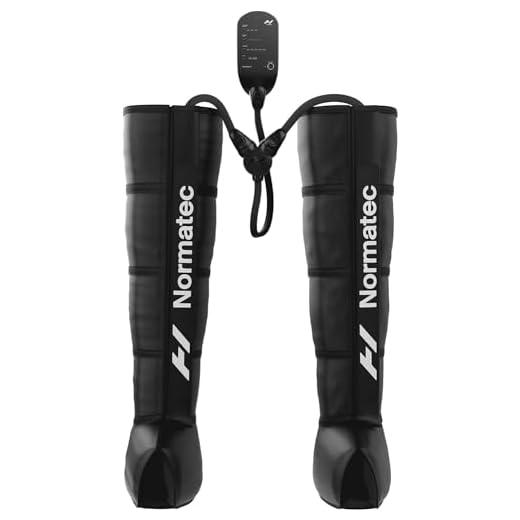
To give you an idea of what a high-quality system looks like, the Hyperice Normatec 3 is currently the most recognizable name in the space, used widely by pros.
Are They Worth It?
If you struggle with heavy legs, recovery downtime, or just general lower-body fatigue, these devices can be a game-changer for your routine. They bridge the gap between doing nothing and paying for a professional massage.
However, the market is flooded with options. Some are medical-grade devices, while others are little more than vibrating leg warmers. Knowing the difference is key to spending your money wisely.
I have compiled a list of the top-rated systems for this year, ranging from budget-friendly wired units to the ultimate wireless luxury picks.
Read Next: Best Air Compression Boots