TENS technology (Transcutaneous Electrical Nerve Stimulation) has become a standard tool for managing issues like sciatica, arthritis, or general muscle stiffness at home. By sending electrical impulses to block pain signals, they offer a drug-free alternative to popping painkillers.
The real challenge isn’t finding a unit; it’s finding one that doesn’t feel cheap. There is a noticeable difference between a quality device that delivers a deep, smooth pulse and a budget gadget that just feels sharp and prickly on the skin. You also need to watch out for units that eat through batteries or use proprietary pads that cost a fortune to replace.
I have broken down the current market based on power consistency, battery type, and long-term value to help you find a unit that is actually worth keeping in your medicine cabinet.
TENS Units Recommendations

- Modes: Multiple TENS options
- Pads: 4 electrodes included
- Display: Clear LCD screen
- Design: Compact & portable

- Channels: Dual A/B
- Modes: 24 preprogrammed
- Intensity: 20 levels
- Battery: Rechargeable
- Functions: TENS, EMS, Heat
- Channels: 2 adjustable
- Settings: 64 pre-programmed
- Display: Inverse LCD
- Power: 2x compared to PM400
- Modes: 6 preset, 3 massage
- Pads: Reusable up to 150x
- Type: Drug-free pain relief
- Modes: 18 adjustable
- Battery: 12 hrs
- Pads: 2 large, adhesive
- Connection: Wireless remote
- Modes: 8 TENS, 6 EMS
- Wireless: Easy setup
- Includes: 2 pods, electrodes
- Battery: Rechargeable
Full List & Reviews
TENS 7000 Digital Muscle Stimulator
- Modes: Multiple TENS options
- Pads: 4 electrodes included
- Display: Clear LCD screen
- Design: Compact & portable
PROS
Delivers professional-grade intensity (up to 100mA) that is stronger than most portable units
Includes a hard carrying case that protects the device and organizes accessories
Safety guard over the amplitude knobs prevents accidental shocks while moving
Dual-channel operation allows for independent intensity control on different body parts
Highly durable construction that withstands years of regular use
CONS
Relies on 9V batteries rather than an internal rechargeable lithium battery
Control knobs are recessed and difficult to turn if you have large fingers
Loud, non-stop beeping upon cycle completion can be annoying
The screen lacks a backlight, making it hard to adjust in the dark
Included pads may lose stickiness faster than premium alternatives
The TENS 7000 Digital Muscle Stimulator acts as a robust staple of at-home electrotherapy, prioritizing raw power and clinical reliability over modern aesthetic bells and whistles. It features a dual-channel design that allows you to treat two different areas of the body simultaneously with up to four electrode pads. What immediately distinguishes this unit from sleeker, smartphone-style competitors is its intensity capability; with a maximum output of 100mA, it provides a “prescription-strength” experience designed to mirror the professional machines used in physical therapy clinics. You can select from five distinct therapy modes, including Burst, Normal, and Modulation, allowing you to tailor the treatment pattern to specific nerve pain or muscle recovery needs.
Performance
This device features a physical design that is incredibly practical for active use, despite its utilitarian, retro interface. You control the intensity via two analog knobs located at the top of the unit, which are protected by a clear plastic safety cap. This is a brilliant safety feature that prevents the dials from getting bumped and accidentally delivering a shocking jolt if you have the unit clipped to your belt while doing chores or moving around. The digital screen allows for precise adjustments to pulse width and rate, giving you granular control over the sensation, whether you need a deep, aggressive massage for the lower back or a lighter tingling sensation for a stiff neck. It comes packaged in a hard carrying case, which keeps the lead wires, 9V battery, and electrodes organized and protected during travel.
The Drawbacks
The design shows its age in the power department. It relies on standard 9V batteries rather than a built-in rechargeable cell, so you will want to buy rechargeable 9Vs to save money. The protective bar over the knobs is great for safety, but it makes turning them difficult if you have large fingers. Also, the timer alarm is aggressive—it beeps continuously when the session ends until you manually switch the unit off, which is annoying if you are trying to relax.
TENS 7000 Digital Muscle Stimulator
Best For
If you have previously found other over-the-counter stimulators to be too weak to penetrate deep muscle tissue, this specific model is likely the robust upgrade you are looking for. It is particularly well-suited for individuals dealing with sciatica, arthritis, or old sports injuries who require a device that can sustain high-intensity output without fading. The manual controls and lack of a fragile touchscreen make it a rugged companion for anyone who needs to wear their device while working in the yard or remaining active, as the heavy-duty belt clip and knob guard offer security against accidental spikes in power that other sensitive touch-devices lack.
Belifu Dual Channel TENS EMS Pain Relief
- Channels: Dual A/B
- Modes: 24 preprogrammed
- Intensity: 20 levels
- Battery: Rechargeable
PROS
Built-in rechargeable lithium battery eliminates the need for buying disposables
Incredibly small and lightweight, making it easy to carry in a pocket
Available in a wide variety of fun colors (Gold, Pink, Purple, Green, etc.)
Very affordable price point for a dual-channel device
Comes with a large number of pads and cable management ties
CONS
Navigation is confusing with too many similar modes and small icons
Durability is lower than premium models, with reports of charging port failures
Stimulation can feel “prickly” or sharp compared to smoother, more expensive units
Lack of a screen lock button can lead to accidental intensity changes in pockets
Instruction manual is poorly translated and difficult to understand
The Belifu Dual Channel TENS EMS Unit proves that effective pain relief doesn’t require bulky equipment or a high price tag. This device is incredibly compact—roughly the size of a credit card—yet manages to pack a surprising amount of power for muscle stimulation and nerve pain management. Unlike the clinical gray boxes of the past, this unit adds a bit of personality to your recovery kit by offering a wide array of color options, including green, pink, purple, and gold, letting you choose a style that fits your vibe. It features a rechargeable lithium battery, which saves you the hassle and recurring cost of hunting down 9V batteries, and uses a dual-channel system so you can treat two different body parts at once with independent intensity levels.
Performance
This device offers 24 pre-programmed massage modes that range from deep kneading sensations to tapping and acupuncture-style pulses. The internal battery is a standout feature, often lasting for days or even weeks of regular use on a single charge, making it an excellent travel companion. Because it is so lightweight, you can easily slip it into a pocket while doing chores or working at a desk without it dragging your clothing down, and the included cable ties help keep the long lead wires from getting tangled. It comes with a generous supply of pads and a drawstring bag, offering a complete starter package right out of the box.
The Drawbacks
Navigation is where this budget-friendly unit shows some limitations. With 24 different modes to cycle through, finding the exact one you liked yesterday can be a frustrating game of trial and error, especially since the on-screen diagrams are tiny and not very intuitive. The electrical pulses can also feel sharper or more “prickly” on the skin compared to higher-end models that offer a smoother wave sensation, which might be uncomfortable for those with sensitive skin. Durability is another potential concern; the charging ports and lead wire connections are less robust than premium models and may fail sooner than expected, and the lack of a screen lock button means you might accidentally bump the intensity while it’s in your pocket.
Belifu Dual Channel TENS EMS Pain Relief
Best For
For those dipping their toes into electrotherapy for the first time, this unit lowers the barrier to entry significantly. It is specifically well-suited for students, travelers, or office workers who need a discreet, ultra-portable solution for neck tension or cramps without a significant financial commitment. The vast color selection also makes it feel less like a sterile medical device and more like a personal wellness gadget. While it may not have the rugged longevity of a professional clinic unit, the convenience of USB charging and its featherlight design make it a very accessible option for quick relief on the go.
AVCOO 3-in-1 TENS Muscle Stimulator

- Modes: TENS, EMS, RELAX
- Channels: Dual A/B
- Intensity: 40 Levels
- Battery: 40 hrs rechargeable
PROS
Versatile 3-in-1 functionality covers TENS, EMS, and Massage modes
Rechargeable lithium battery provides up to 40 hours of usage
Intuitive interface uses a body map diagram for easy mode selection
Includes a generous 24-month warranty for peace of mind
High intensity output (40 levels) suitable for deep muscle stimulation
CONS
Not a “true” dual-channel system; modes are linked between channels
Screen and build quality are fragile and may crack if dropped
Lacks a belt clip for hands-free mobility
Lead wires are thin and prone to breakage if pulled
Sticky pads may leave residue and lose adhesion quickly
The AVCOO 3-in-1 TENS Unit Muscle Stimulator positions itself as a versatile all-rounder, combining standard TENS pain relief with EMS (Electrical Muscle Stimulation) and a relaxation massage mode into a single, rechargeable device. It stands out visually with a large, backlit interface that features a human body diagram; instead of memorizing cryptic mode numbers, you simply select the body part you are treating, and the corresponding area flashes on the screen. This user-friendly visual approach removes much of the guesswork for beginners. Under the hood, it packs a surprising amount of punch with 40 intensity levels, and the internal lithium battery is a significant convenience, offering up to 40 hours of use on a single charge so you aren’t tethered to a wall outlet or hunting for disposable batteries.
Performance
This device stands out with a “3-in-1” functionality that is quite distinct. While the TENS mode focuses on blocking pain signals for conditions like sciatica or joint soreness, the EMS mode is designed to stimulate healthy muscles to improve performance or prevent atrophy. This makes it a flexible tool for a household that might have one person dealing with chronic back pain and another looking for muscle recovery after a gym session. The package is generous, including a wide variety of pad shapes—from large rectangles for backs to small ovals for joints—allowing for precise targeting right out of the box.
The Drawbacks
While the device boasts a dual-channel design, it functions differently than some higher-end models might lead you to believe. You can adjust the intensity separately for channels A and B, but you generally cannot run two completely different therapy modes simultaneously, such as a massage pattern on your shoulder and an EMS workout on your leg. Durability is another area where the budget-friendly price point shows; the screen is somewhat fragile and prone to cracking if dropped on hard surfaces, and the lead wires are delicate, requiring careful handling to prevent connection shorts. Additionally, the lack of a built-in belt clip can be frustrating if you intend to move around the house while receiving treatment, as you are forced to carry the unit in your pocket.
AVCOO 3-in-1 TENS Muscle Stimulator
Best For
Visual learners and those who prefer a “point-and-shoot” approach to therapy will likely appreciate the intuitive body-map interface found here. It is a fantastic fit for individuals who require high-intensity stimulation without the recurring cost of disposable batteries, thanks to the robust rechargeable power source. If you are looking for a device that bridges the gap between simple pain relief and active muscle recovery tools, the inclusion of specific EMS modes makes this a versatile option for weekend warriors. The manufacturer also backs this unit with decent support, making it a lower-risk investment for those new to electrotherapy.
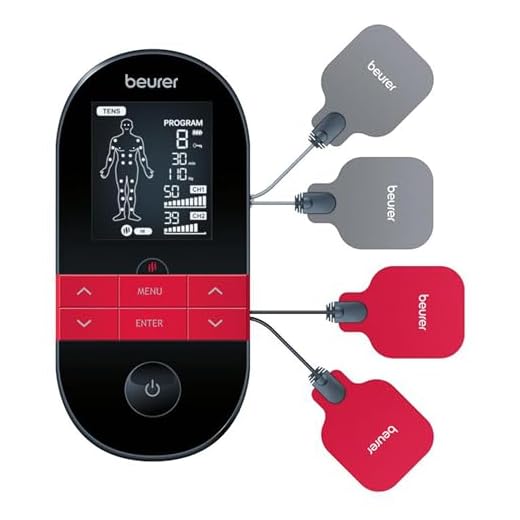
Beurer EM59 3-in-1 TENS Unit for Pain Relief
- Functions: TENS, EMS, Heat
- Channels: 2 adjustable
- Settings: 64 pre-programmed
- Display: Inverse LCD
PROS
Unique heat function adds significant therapeutic value to TENS/EMS
Rechargeable battery eliminates the need for disposable AA/AAA batteries
Offers TENS, EMS, and Massage modes in a single device
High power output that rivals professional clinical machines
Compact and ergonomic design with a useful belt clip
CONS
Requires expensive, proprietary gel pads that cannot be swapped for generics
Adhesive on the pads tends to wear out quickly
Battery life is significantly reduced when using the heat function
Connection cable to the main unit can sometimes come loose during movement
Higher upfront cost compared to standard TENS units
The Beurer EM59 Digital 3-in-1 TENS Unit stands out in a crowded market by offering a therapeutic feature that most standard electrotherapy devices lack: soothing heat. While many units focus solely on zapping pain away, this German-engineered device combines Transcutaneous Electrical Nerve Stimulation (TENS) for pain relief, Electrical Muscle Stimulation (EMS) for muscle rehabilitation, and a heating function to relax tight tissue simultaneously. It feels less like a basic medical tool and more like a comprehensive recovery gadget, sporting a modern, rechargeable design that eliminates the need for a drawer full of disposable batteries. The interface is robust, offering over 60 pre-set programs ranging from massage therapies to intense muscle training, all viewable on a reverse LCD screen that guides you on where to place the electrodes.
Performance
This unit is deceptively powerful for its compact, portable size, often delivering deep, effective muscle contractions or pain-blocking pulses without needing to reach the halfway intensity mark. The heat function adds a layer of comfort that significantly helps with chronic lower back pain or stiff joints, essentially mimicking a hot stone massage combined with electrotherapy. The rechargeable battery is a major convenience for daily use, generally lasting through several standard sessions, though utilizing the heat function will naturally drain the power faster than using stimulation alone.
The Drawbacks
The heat function requires specific proprietary pads to work. You cannot swap these for cheap generic replacements, and the Beurer pads are expensive and tend to lose stickiness quickly. The connection point for the lead wire is also a bit finicky; the USB-C style plug can wiggle loose if you move around too much. Finally, be prepared to charge it often—using the heat feature drains the battery much faster than standard stimulation.
Beurer EM59 3-in-1 TENS Unit for Pain Relief
Best For
If you are someone who finds that a hot bath or heating pad provides as much relief as medication, investing in this 3-in-1 solution could be a game-changer for your recovery routine. It is specifically designed for those dealing with complex conditions like frozen shoulder or chronic lumbar pain where the combination of warmth and stimulation provides a compound effect that neither could achieve alone. While the ongoing cost of proprietary pads makes it a higher-maintenance choice, the ability to carry a single device that heats, massages, and rehabilitates muscles makes it a top-tier option for serious recovery.
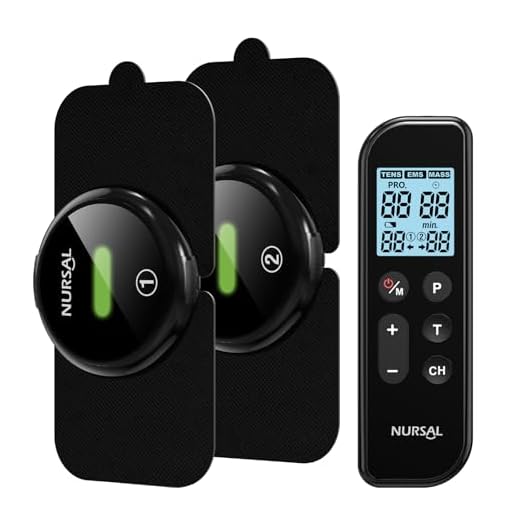
NURSAL Wireless TENS Unit for Pain Relief
- Modes: 18 adjustable
- Battery: 12 hrs
- Pads: 2 large, adhesive
- Connection: Wireless remote
PROS
Completely wireless design eliminates tangling and allows for discreet use
Independent host units allow for treating two different body areas simultaneously
Handheld remote makes adjusting settings easy without accessing the pads
Uses USB-C charging, making it compatible with modern phone chargers
Compact and lightweight, perfect for travel or wearing under clothes
Magnetic connection between the device and pads is quick and easy to use
CONS
Proprietary pads are required, limiting your ability to use generic replacements
Adhesive on the pads tends to wear out quickly, causing the units to fall off
Remote control can sometimes experience lag or connectivity delays
Lack of clear battery level indicators on the individual host units
The weight of the host unit can pull the pad off if the adhesive isn’t fresh
The NURSAL Wireless TENS Unit Muscle Stimulator completely cuts the cord on traditional electrotherapy, offering a liberating experience for anyone tired of getting tangled in lead wires during a recovery session. Instead of a single central controller connected to electrodes by long cables, this system uses two separate, rechargeable “host” discs that snap magnetically onto the pads. You control everything wirelessly via a sleek, handheld remote, which allows you to adjust settings without ever having to reach under your shirt or awkwardly twist your body to change the intensity. This design makes it one of the most discreet options available, perfect for wearing under a sweater at the office or while doing chores around the house without looking like a science experiment.
Performance
This budget-friendly wireless system provides a surprisingly robust experience for such a compact design. Because there are two independent host units, you can treat two completely different areas of your body simultaneously with different settings; for example, you could run a gentle massage mode on your neck while hitting your lower back with a higher-intensity EMS workout. The device offers a mix of TENS, EMS, and massage therapies with 18 distinct modes and 20 intensity levels. Charging is handled via modern USB-C cables, and the battery life is generally solid enough to get you through a full day of intermittent relief.
The Drawbacks
Relying on a wireless design does introduce some specific frustrations that wired units avoid. The primary issue is the proprietary electrode pads; because the host units attach via a specific magnetic buckle, you cannot use standard, inexpensive replacement pads found at the local pharmacy. These specific pads tend to lose their adhesive quality faster than average, and once they stop sticking, the weight of the host unit can cause them to fall off your skin entirely. Additionally, the remote control sometimes suffers from a slight lag or connectivity delay, and the lack of clear charging indicators on the host pucks can leave you guessing whether they are fully juiced up or just partially charged.
NURSAL Wireless TENS Unit for Pain Relief
Best For
Stealth and freedom of movement are the core strengths of this gadget, making it tailor-made for an active lifestyle. Commuters, busy parents, or professionals who need to manage pain in public settings where visible wires would be impractical or embarrassing will find this particularly useful. The ability to control two separate pain points wirelessly offers a level of convenience that bulky, wired units simply cannot match, making it a smart secondary device for on-the-go relief.
AUVON 3-in-1 TENS Muscle Stimulator and Massager

- Modes: TENS, EMS, RELAX
- Pads: 8 x 2″ + 4 x 2″x4″
- Adjustable Time: 90 mins
- 40 Levels: Gradual relief
PROS
Excellent battery life that lasts for days on a single charge
Offers TENS, EMS, and specific Relaxation modes
High-quality adhesive pads that stick very well to curved areas
Independent intensity controls for treating two different areas
Compact size fits easily into a pocket or travel bag
CONS
Wire connection ports are fragile and can disconnect if jostled
Screen backlight is excessively bright for nighttime use.
Lacks a belt clip, making hands-free mobility difficult
Screen icons can be small and difficult to decipher without the manual
Pad adhesive can be overly aggressive and leave residue on sensitive skin
The AUVON 3-in-1 TENS Unit Muscle Stimulator and Massager is a sleek, pocket-sized device that aims to cover all your electrotherapy bases by combining TENS for pain relief, EMS for muscle conditioning, and a specific “Relax” mode for general fatigue. Unlike the utilitarian look of older medical devices, this unit sports a modern aesthetic with a backlit screen and a rechargeable internal lithium battery, freeing you from the constant cycle of buying disposable AAAs. It boasts independent dual-channel control, meaning you can set different intensities for your lower back on channel A while running a milder setting on your shoulder via channel B, providing a customizable experience for managing multiple pain points simultaneously.
Performance
This little gadget delivers intensity that defies its compact size, with 40 intensity levels that range from a gentle tingle to a robust contraction that can surprise even experienced users. The battery life is a standout feature, lasting through days of frequent sessions without needing a recharge, making it a reliable companion for travel or long work shifts. The kit includes a variety of electrode pads featuring “industry-leading” adhesive gel, which offers exceptional grip even on curved body parts like knees or elbows. The inclusion of a continuous timer mode is also a nice touch for those who don’t want their session to cut out automatically after an hour.
The Drawbacks
While the device offers great power, the physical design has some frustrating quirks that you should be aware of. A potential weak point appears to be the durability of the lead wire ports; the connection points where the wires plug into the device can feel fragile and loose, raising the possibility that the unit could cut out if the cable is jostled during movement. Additionally, the blue backlight on the screen is aggressively bright—so much so that it can be blinding in a dark bedroom, which is counterproductive if you are trying to use the device to relax before sleep. The lack of a belt clip, combined with the sensitive wire connections, also makes it difficult to walk around and do chores while wearing the unit.
AUVON 3-in-1 TENS Muscle Stimulator and Massager
Best For
Individuals who need a powerful, long-lasting battery for stationary therapy sessions will find this model fits their lifestyle perfectly. It is a smart pick for office workers or drivers who plan to sit still during treatment and need a battery that won’t die halfway through the day. The incredible stickiness of the pads also makes it a solid option for those with joint pain who struggle to get standard pads to stay put, provided you are careful when peeling them off sensitive skin.
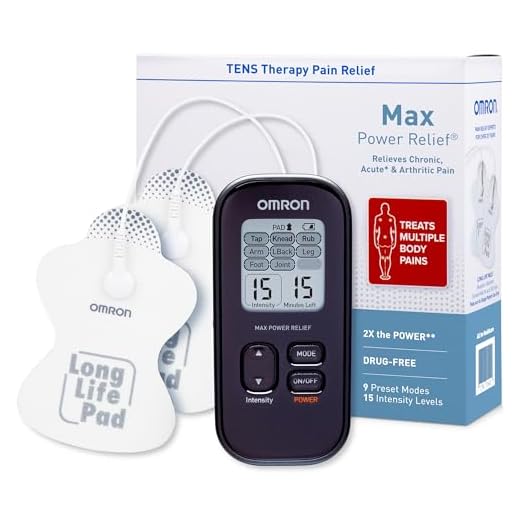
OMRON Max Power TENS Unit for Pain Relief
- Power: 2x compared to PM400
- Modes: 6 preset, 3 massage
- Pads: Reusable up to 150x
- Type: Drug-free pain relief
PROS
Very high intensity output suitable for deep muscle and nerve pain
Simple, large-button interface is easy for anyone to operate
“Long Life” pads are washable and durable
Compact design with a sturdy belt clip for portability
Backed by a reputable medical device manufacturer
CONS
Uses proprietary pads and wires, preventing the use of cheap generics
Replacement pads are expensive compared to other brands
No backlight on the screen makes it hard to see in the dark
Fixed 15-minute timer cannot be adjusted for longer sessions
Runs on AAA batteries rather than a rechargeable internal battery
The OMRON Max Power Relief TENS Unit comes from a brand better known for medical diagnostic equipment than cheap gadgets, and that pedigree shows in its no-nonsense approach to pain management. Instead of overwhelming you with dozens of confusing modes, this device focuses on delivering a highly potent electrical pulse designed to penetrate deep muscle tissue and stubborn nerve pain. It feels very much like a small remote or older smartphone in your hand, featuring large, tactile buttons and a clear screen that makes navigating the nine pre-set modes incredibly straightforward.
Performance
You can toggle between specific body zones like the lower back or foot, or switch to massage-style sensations such as kneading and tapping. Despite running on standard AAA batteries, the power output is impressive; you will likely never need to go past the halfway mark on the 15-level intensity scale to find relief for chronic issues like sciatica or old sports injuries. A unique feature of this system is the “Long Life” pads, which are thicker than standard electrodes and can be washed under cold water to restore their stickiness, potentially lasting for up to 150 uses if maintained correctly.
The Drawbacks
The biggest frustration here is the ecosystem. You are forced to use Omron’s proprietary pads and wires, which are significantly more expensive than universal snap-on pads. The screen also lacks a backlight, so good luck adjusting it in the dark without turning on a lamp. The safety timer is also rigid; it shuts off after 15 minutes, forcing you to restart the device manually if you want a longer session.
OMRON Max Power TENS Unit for Pain Relief
Best For
Individuals prioritizing brand reliability and raw strength over having the lowest possible running costs will find this unit to be a strong contender. It is specifically tailored for those who want a simplified, powerful experience without navigating complex menus, or for older users who appreciate the large, legible interface and easy-to-press buttons. The included belt clip and sturdy construction also make it a dependable choice for wearing discreetly at the office or during a commute, provided you are comfortable with the recurring cost of brand-name replacement pads.
Neocarbon TENS Unit Muscle Stimulator for Pain Relief

- Modes: 36 TENS/EMS
- Intensity: 20 levels
- Charge: 50 hrs use
- Includes: 12 pads, case
PROS
Modern USB-C charging port matches current tech standards
Excellent battery life capable of lasting through days of use
Includes a premium hard-shell travel case for protection and organization
Large, backlit LCD screen is easy to read in the dark
Comprehensive kit comes with 12 electrode pads right out of the box
CONS
Lacks a belt clip, making it difficult to move around during treatment
Higher price point compared to similar performing units
Intensity levels can jump abruptly rather than increasing smoothly
Included pads tend to lose their stickiness quickly
Smooth finish makes the device slippery and easy to drop
The Neocarbon TENS Unit Muscle Stimulator Pro breaks away from the utilitarian look of older medical devices, offering a premium, modernized solution with a sleek, smartphone-esque aesthetic. It arrives as a comprehensive “all-in-one” kit, housed in a high-quality hard-shell carrying case that keeps the device, lead wires, and the generous supply of 12 electrode pads neatly organized. One of its most convenient features is the inclusion of USB-C charging, which brings it in line with modern tech standards and offers a substantial battery life that can purportedly last up to 50 hours on a single charge, freeing you from the anxiety of your device dying mid-session.
Performance
Operation is handled through a large, backlit LCD screen that uses oversized icons, making it significantly easier to navigate in low-light conditions compared to cheaper, non-backlit competitors. The unit offers a massive variety of 36 distinct modes split between TENS for pain blocking, EMS for muscle conditioning, and general massage patterns for relaxation. It is a dual-channel device, allowing you to run different intensities on separate body parts, and despite its slim profile, it delivers a surprisingly potent shock that rivals larger clinical machines.
The Drawbacks
Ideally, a portable unit needs a belt clip, but this one doesn’t have one. The finish is smooth and slippery, so you have to carry it in a pocket where buttons can easily get bumped. The power delivery is also a bit unrefined; jumping from level 2 to level 3 feels like a sharp spike rather than a smooth graduation. Also, despite the “premium” look, the included pads degrade and lose adhesion faster than expected.
Neocarbon TENS Unit Muscle Stimulator for Pain Relief
Best For
Business travelers or tech-savvy individuals who value organization and battery longevity over hands-free mobility will find this specific model to be a strong contender. For those who already travel with USB-C chargers for a phone or laptop, this unit integrates seamlessly into a tech ecosystem without requiring extra cables or disposable batteries. It is best suited for stationary recovery sessions—such as sitting at a desk or relaxing in a hotel room—where the lack of a belt clip is less of a hindrance and the protective travel case ensures the equipment remains safe in transit.
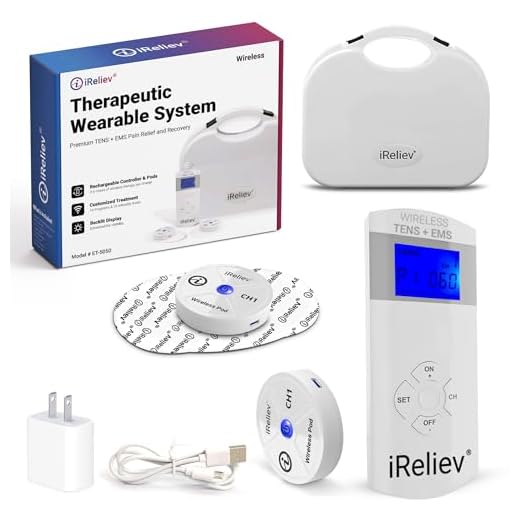
iReliev Wireless TENS + EMS Therapeutic Wearable System
- Modes: 8 TENS, 6 EMS
- Wireless: Easy setup
- Includes: 2 pods, electrodes
- Battery: Rechargeable
PROS
Fully wireless design offers unmatched freedom of movement
Combines both TENS (pain relief) and EMS (muscle training) in one device
Independent channel control allows different settings for each pod
Expandable system can support up to four wireless pods
High-quality backlit remote is easy to read and use
CONS
Significantly more expensive than standard wired units
Proprietary pads are pricey and cannot be swapped for generics
Weight of the pods can cause pads to peel off if adhesive isn’t fresh
Snapping pods onto pads can require significant force
Requires managing charge for multiple separate components (remote + pods)
The iReliev Wireless TENS + EMS Therapeutic Wearable System sits at the premium end of the spectrum, offering a sleek, wire-free experience that justifies its higher price tag with advanced versatility. This isn’t just a basic pain zapper; it’s a dual-function device that combines TENS for pain relief with EMS for muscle conditioning and strength training. The system uses wireless “pods” that snap directly onto the electrode pads, controlled entirely by a handheld remote. This design allows you to wear the pods discreetly under clothing without any tell-tale wires snake down to your belt, offering true freedom of movement whether you’re at the office or doing yoga in your living room.
Performance
Isolated channel capability is what truly sets this system apart. Unlike cheaper wireless units that force all pads to do the same thing, the iReliev allows you to program each pod independently. You can run a TENS program on your lower back to soothe sciatica while simultaneously running an EMS strength program on your quads, all controlled from the same remote. The system comes with two pods but is expandable up to four, making it a scalable solution for full-body therapy. The build quality feels substantial, and the backlit remote is intuitive, making it easy to cycle through the 14 pre-set modes (8 TENS, 6 EMS) without guessing what setting you are on.

The Drawbacks
Going wireless is expensive. The proprietary pads cost more than standard ones, and because the heavy pods hang off them, they tend to peel away from the skin sooner than you’d like. Snapping the pods onto the electrodes also takes a surprising amount of force, which can be tough if you have arthritic hands. You also have to manage the charging logic: you need to keep the remote and both individual pods charged, which adds a bit of chore work to your recovery.
iReliev Wireless TENS + EMS Therapeutic Wearable System
Best For
Serious athletes or chronic pain sufferers who view electrotherapy as a daily lifestyle necessity will find this system to be an ideal choice. The ability to mix and match TENS and EMS therapies wirelessly provides a significant efficiency boost for those who want to maximize their recovery time. For those willing to invest in a high-quality ecosystem and manage the higher ongoing cost of proprietary pads, the iReliev offers a level of customization and freedom that standard wired units simply cannot touch.
TENKER TENS Unit Muscle Stimulator – 24 Modes

- Modes: 24 customizable
- Intensity: 20 levels
- Battery: 10 hrs rechargeable
- Design: Dual output
PROS
Extremely affordable price point
Tiny, lightweight design is highly portable
Rechargeable battery lasts for up to 10 hours
Surprisingly strong power output for its size
Simple, easy-to-read backlit display
CONS
Channels are not independent; intensity and mode change for all pads together
Adhesive pads lose stickiness relatively quickly
Intensity resets to zero every time the mode is changed
Instruction manual text is very small and hard to read
Uses older Micro-USB charging cable
The TENKER TENS Unit Muscle Stimulator is an ultra-compact solution for those seeking pain relief without the bulk of traditional devices. About the size of an older MP3 player, this unit is designed for ultimate portability, fitting easily into a pocket for use at the office or while traveling. Despite its diminutive stature, it delivers a surprising amount of power across its 24 pre-programmed modes and 20 intensity levels. It features a built-in rechargeable lithium battery, which is a significant advantage over similarly priced units that still rely on AA or AAA batteries, providing up to 10 hours of continuous use on a single charge. The package includes a variety of pad sizes, allowing you to target different muscle groups immediately.
Performance
Once you get the hang of it, the device is straightforward to operate. The backlit screen helps with visibility, and the interface allows you to cycle through various massage techniques like kneading and tapping. While it boasts dual output ports allowing you to use four pads simultaneously, it is important to note that this is not a fully independent dual-channel system. This means that whatever mode and intensity you select will apply to all connected pads; you cannot have a high-intensity kneading massage on your shoulder while having a low-intensity tapping sensation on your lower back. However, for general, uniform pain relief across a larger area, it performs admirably and the battery life is consistently excellent.
The Drawbacks
There are some compromises made to hit this budget-friendly price point. A significant issue involves the longevity of the electrode pads; the adhesive tends to degrade faster than premium brands, often requiring replacement after just a few uses if not meticulously cleaned. Additionally, the user manual is printed in an incredibly small font that can be difficult to read, and the device lacks a memory function to save your preferred settings, meaning you have to reset your intensity every time you turn it on or switch modes. The charging port is also the older Micro-USB standard rather than the modern USB-C found on newer electronics, which might be an annoyance if you are trying to minimize the number of cables you carry.
TENKER TENS Unit Muscle Stimulator – 24 Modes
Best For
This unit is best suited for the budget-conscious buyer or the first-time user who wants to try electrotherapy without a significant financial commitment. It also makes for an excellent “backup” device to keep in a gym bag or office drawer due to its tiny footprint and reliable battery. If you simply need basic, strong stimulation for a single pain area and don’t care about complex, independent channel programming, this device offers incredible value for money.
Comfytemp TENS Unit Muscle Stimulator

- Modes: 24 preset + DIY
- Screen: 3-inch HD display
- Channels: Independent A/B
- Pads: 10 reusable electrodes
PROS
Features a “DIY Mode” for customizing pulse frequency and width
Large, 3-inch backlit screen is easy to read
Rechargeable via modern USB-C connection
Includes a belt clip for hands-free mobility
Dual channels allow for independent intensity control
CONS
Interface is confusing and has a steep learning curve
Adhesive pads wear out and lose stickiness quickly
Wire connection ports can be sensitive or loose
Lacks a dedicated “start” button, leading to operation confusion
Intensity jumps between levels can be abrupt
The Comfytemp TENS Unit Muscle Stimulator is a fantastic entry-point for anyone looking to manage pain without spending a fortune on medical-grade equipment. It distinguishes itself immediately with a large, 3-inch backlit screen that makes seeing your settings much easier than on the tiny displays found on similar compact units. What really sets this apart from the sea of generic pulse massagers is the inclusion of a specialized “DIY” mode; this allows you to manually adjust the pulse width and frequency rather than being stuck with pre-set patterns that might not hit the spot. It comes as a complete kit with a generous supply of electrode pads in various sizes, so you can target a broad lower back area or a focused knee joint from day one.
Performance
This device stands out for its dual-channel design, letting you treat two different body parts simultaneously with independent intensity levels. It packs a surprising amount of power across its 20 intensity levels, often requiring only a low setting to feel a deep muscle contraction. The convenience factor is high thanks to the rechargeable battery that powers up via a standard USB-C port, eliminating the need to hunt for AA batteries when you are in pain. It also features a belt clip, which is a small but essential addition for anyone who wants to move around the house or do light chores while receiving therapy.
The Drawbacks
The menu system is the biggest hurdle. It isn’t intuitive, and figuring out how to lock settings or start a cycle often leads to button-mashing confusion. While the included pads are plentiful, they lose their tackiness faster than premium brands. The wire ports also feel slightly loose; a sudden tug on the cable can occasionally cause the unit to pause or disconnect.
Comfytemp TENS Unit Muscle Stimulator
Best For
If you enjoy tinkering with settings to find the perfect electrical sensation, this device offers a level of customization that is rare in this price bracket. It is an ideal match for the tech-curious user who wants to experiment with specific pulse widths via the DIY mode rather than relying solely on pre-programmed massages. The large, clear screen also makes it a smart pick for those who struggle to read tiny text on smaller electronic devices. While it requires a bit of patience to master the controls, the combination of manual adjustments and rechargeable power makes it a high-value tool for budget-conscious pain management.
KingPavonini Wireless TENS Unit

- Modes: 6 pre-set options
- Intensity: 16 adjustable levels
- Battery: Rechargeable case
- Pads: 4 reusable hydrogel
PROS
Sleek, earbud-style charging case keeps everything organized and powered
Completely wireless design eliminates tangled cords
Magnetic snap connection makes attaching discs to pads fast and easy
Portable and lightweight, ideal for travel or gym use
Independent discs allow for flexible placement on different body parts
CONS
Fixed 15-minute timer cannot be extended and requires manual restart
Battery life on individual discs can be short and inconsistent
Requires proprietary pads with magnetic buckles; no generic options
Turning on both the case and discs separately can be a bit fiddly
No belt clip, so you have to carry the charging case/remote in a pocket
The KingPavonini Wireless TENS Unit embraces a modern, minimalist design philosophy that feels less like a medical device and more like a high-end consumer gadget. Housed in a charging case that strongly resembles a set of premium wireless earbuds, this system offers a completely wire-free experience. The main control unit and the individual electrode “discs” dock magnetically into the case to recharge, ensuring they are topped up and ready to go whenever you need them. This sleek form factor makes it incredibly portable and discreet, perfect for tossing into a gym bag or purse without worrying about tangled wires or bulky controllers.
Performance
This device offers a solid range of options with 6 modes and 16 intensity levels, covering standard TENS pain relief, EMS muscle stimulation, and massage patterns. The wireless discs snap magnetically onto the electrode pads, providing a quick and satisfying way to set up your session. Because the discs are independent, you can place them on two separate areas of your body without being tethered by a connecting wire, offering genuine freedom of movement. The LED screen on the charging case is clear and bright, making mode selection straightforward, although you do have to turn on both the main case and the individual discs to get started.
The Drawbacks
The functional experience has some limitations that are frustrating for extended use. The most significant is the strict 15-minute timer; the device auto-shuts off after this period, and restarting it requires a bit of a process to re-pair and reset your settings, which disrupts the flow of longer therapy sessions. Additionally, the battery life of the individual discs can be inconsistent, often requiring frequent recharging after just a few short cycles. The proprietary nature of the pads also means you are locked into buying specific replacements that fit the magnetic buckle system, rather than using generic, cheaper alternatives.
KingPavonini Wireless TENS Unit
Best For
This unit is an excellent match for the tech-forward user who values aesthetics and extreme portability over long-duration therapy sessions. It is perfect for short bursts of relief during a commute, at a desk, or after a quick workout where a 15-minute cycle is sufficient. If you hate the “medical” look of traditional TENS units and want something that blends in with your other modern electronics, this stylish, wire-free option is a strong contender.
Best Overall TENS Unit
TENS 7000 Digital Muscle Stimulator
- Modes: Multiple TENS options
- Pads: 4 electrodes included
- Display: Clear LCD screen
- Design: Compact & portable
For most people seeking serious pain relief, the TENS 7000 Digital Muscle Stimulator is the top choice. While it lacks the modern look of rechargeable units, it offers “prescription-strength” power (up to 100mA) that rivals professional clinic machines. Its rugged design, complete with a safety guard for the controls and a hard carrying case, makes it a reliable workhorse for treating conditions like sciatica or arthritis. If you prioritize effective, deep muscle stimulation over fancy touchscreens, this is the most robust and dependable option available.